
"Frivolous Lawsuit" Is a Phrase That Was Invented. Here's Who Made It and Why.
Personal Injury Law | San Antonio, Texas
By Steven A. Lopez | Personal Injury Attorney, San Antonio, Texas
You've heard the phrase your whole life. "Frivolous lawsuit." Your uncle uses it at Thanksgiving. Politicians use it on the campaign trail. Late night hosts used it for decades as a punchline.
It feels like a phrase that just exists. Part of the culture. Common sense. It isn't. It was built. Deliberately, expensively, and with a very specific goal in mind.
As a personal injury attorney in San Antonio, I think every person who has ever been injured and felt embarrassed to call a lawyer deserves to know where that feeling actually came from.
1986: The Year the Campaign Began
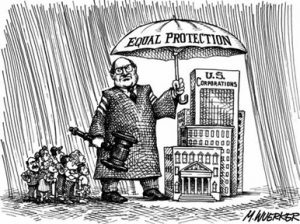
In 1986, a coalition of insurance companies and large corporations quietly formed a lobbying organization called the American Tort Reform Association, known as ATRA. Their stated mission was civil justice reform. Their actual mission was simpler: make the American public distrust personal injury lawsuits.
They were not responding to a genuine crisis in the court system. They were responding to a string of large verdicts against corporations that had cut safety corners, sold defective products, and harmed people. Rather than address the underlying conduct, they decided to change the conversation.
They funded research. They placed stories in major media outlets. They cultivated relationships with politicians on both sides of the aisle. And they gave the whole effort a name that sounded reasonable and neutral: tort reform.
What Tort Reform Actually Meant
Tort law is the body of civil law that allows individuals to seek compensation when someone else's negligence causes them harm. It is the legal foundation of every personal injury case, every product liability claim, every wrongful death suit filed by a family that lost someone because a company chose profit over safety.
Reforming tort law, in theory, could mean many things. In practice, the tort reform movement of the 1980s and 1990s meant one thing: making it harder for injured people to recover full compensation in court.
The campaign pushed for caps on damages, limits on what juries could award for pain and suffering, and restrictions on punitive damages designed to punish corporate wrongdoing. State by state, they lobbied legislatures and funded candidates who would carry those proposals into law.
Texas was not immune. Bexar County courts, like courts across the state, operate today under a legal framework that was substantially shaped by that decades-long lobbying effort.
The Cases They Called Frivolous
The word frivolous was never about justice. It was about protecting the companies that could already afford to fight back.
The tort reform movement needed examples. Real cases they could point to and say: look at how out of control this has gotten. Look at what juries are doing.
The McDonald's hot coffee case became the most famous. A 79-year-old woman burned badly enough to require skin grafts, whose medical bills McDonald's refused to cover despite 700 prior complaints about the same product, was repackaged as a greedy woman suing over spilled coffee. The PR campaign worked almost perfectly.
But the cases they labeled frivolous extended far beyond that one. A child burned by a defective product whose family sought accountability from the manufacturer. A worker who lost his hand because a company eliminated a safety guard to cut costs. A patient injured by a surgical instrument that had been reported as defective and never recalled.
These were not abuse of the legal system. They were the legal system functioning exactly as it was designed to function: giving individuals without power or resources a forum to hold powerful institutions accountable.
Calling them frivolous was not an observation. It was a strategy.
What Two Decades of That Campaign Produced
The results were measurable and they went in one direction.
Jury verdicts dropped. Not because cases became weaker or injuries became less severe, but because jurors had absorbed the cultural message that large verdicts were irresponsible. Studies conducted after mock trials showed jurors actively second-guessing legitimate awards because they did not want to be seen as the kind of people who handed out lottery tickets.
State legislatures passed damage caps. Texas enacted some of the most restrictive caps in the country, particularly in medical malpractice cases, limiting what even the most catastrophically injured patients could recover regardless of what a jury decided.
And regular people, people who had been genuinely hurt through no fault of their own, started feeling embarrassed to call a lawyer. They internalized the idea that pursuing compensation was somehow shameful. That they were the problem.
That was not an accident. That was the intended outcome.
Why This Matters for Injured People in San Antonio Today
The campaign is not ancient history. Its effects are embedded in Texas law and in the way juries think about personal injury cases in Bexar County courtrooms right now.
When an insurance company offers an injured person a fraction of what their case is worth and that person accepts because they feel guilty about pursuing more, that is the tort reform campaign still working forty years later.
When a seriously hurt person decides not to call a lawyer because they assume the system is rigged against them or because they don't want to be seen as someone chasing money, that is the same campaign doing exactly what it was designed to do.
The civil justice system exists because society decided that individuals deserve a place to seek accountability when they are harmed by someone else's negligence. That right does not become less legitimate because a lobbying organization spent decades telling you it was.
If you've been injured in San Antonio, in the surrounding areas of South Texas, or anywhere in Bexar County, you have the right to understand what your case is actually worth and to pursue it without shame.
FAQs: Tort Reform, Personal Injury Law, and Your Rights in Texas
What is the American Tort Reform Association?
ATRA is a nonprofit lobbying organization founded in 1986 by a coalition of insurance companies and large corporations. It advocates for legislation limiting civil liability and damage awards in personal injury cases. It has been one of the most influential forces in shaping state tort law across the country over the past four decades, including in Texas.
How did tort reform affect Texas personal injury law?
Texas enacted significant tort reform legislation in 2003, including House Bill 4, which placed strict caps on non-economic damages in medical malpractice cases and modified punitive damage rules statewide. These changes directly limit what injured Texans can recover in certain types of cases regardless of the severity of their injuries or the strength of their evidence.
What are damage caps and how do they affect my case?
Damage caps are statutory limits on how much a plaintiff can recover in certain categories of damages, typically non-economic damages like pain and suffering. In Texas medical malpractice cases, non-economic damages are capped at $250,000 per defendant. In other personal injury cases, punitive damages are generally capped at the greater of $200,000 or two times economic damages plus non-economic damages up to $750,000. Your attorney can explain exactly how caps apply to your specific situation.
Does having a personal injury attorney in San Antonio make a difference?
Yes, significantly. Studies consistently show that injured people who retain attorneys recover more than those who negotiate directly with insurance companies, even after attorney fees. Insurance adjusters are trained to minimize payouts. A personal injury attorney in San Antonio who knows Bexar County courts, local jury tendencies, and the full value of your claim changes the dynamic of that negotiation entirely.
Is it true that most personal injury lawsuits are frivolous?
No. Personal injury attorneys work on contingency, meaning they only get paid if they win. That structure creates a strong financial incentive to take only cases with genuine merit. Filing a case with no legal foundation wastes an attorney's time and money. The legal system also has procedural mechanisms to dismiss cases that lack merit early in the process. The idea that courts are flooded with baseless claims is a central piece of the tort reform narrative, not an accurate description of how civil litigation actually works.
What should I do if I've been injured and I'm not sure I have a case?
Call a personal injury attorney and ask. Most, including our firm, offer free consultations and work on contingency. You will not be charged to have a conversation about what happened to you and whether the law provides a remedy. The worst outcome of that call is you leave knowing exactly where you stand. That is always worth the call.
The Bottom Line
The phrase frivolous lawsuit did not emerge from public frustration with the court system. It was manufactured by a well-funded campaign designed to make you skeptical of your own rights before you ever picked up the phone.
Knowing that history does not guarantee you a better outcome in your case. But it might be the difference between making that call and not making it.
If you or someone you know has been injured in San Antonio or anywhere in South Texas, and you've been hesitating because you're not sure it's worth it or you don't want to seem like one of those people, this is your sign to have the conversation.
We offer free consultations. We work on contingency. We do not get paid unless you do.
Schedule a free consultation with our San Antonio personal injury team. You pay nothing unless we win.