
The McDonald's Hot Coffee Case Wasn't Frivolous. Here's What Actually Happened.
Personal Injury Law | San Antonio, Texas
By Steven A. Lopez | Personal Injury Attorney, San Antonio, Texas
You've heard the joke. A woman spills coffee on herself, sues McDonald's, wins millions. Cue the eye rolls. It became the punchline of every conversation about frivolous lawsuits. Used in law schools, repeated by comedians, and recycled by politicians as proof that the American legal system had gone off the rails.
There's just one problem: the story you've been told isn't true. And as a personal injury attorney in San Antonio, I can tell you the real facts of this case are not a joke. They are exactly why personal injury law exists.
What the Headlines Left Out
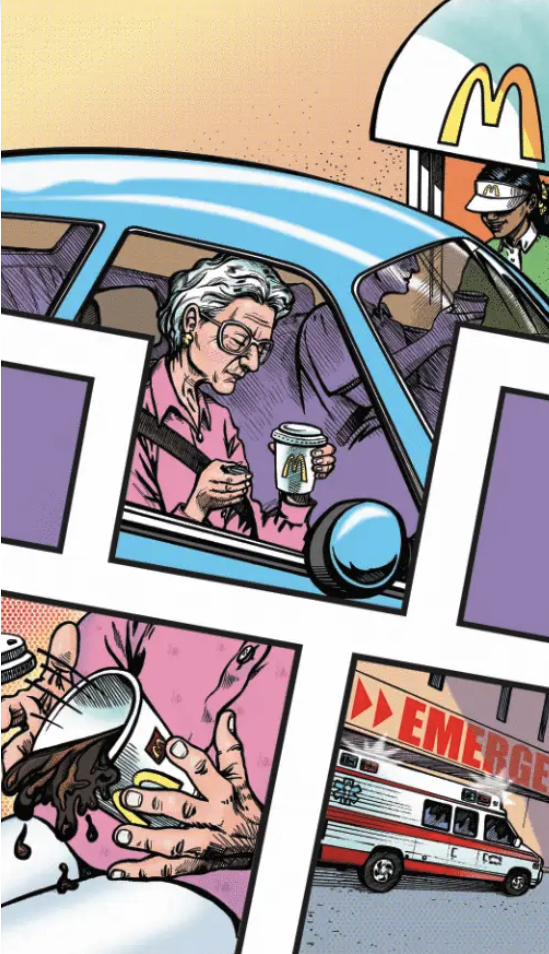
Stella Liebeck was 79 years old when she was burned by McDonald's coffee in 1992. She wasn't driving. She was a passenger in a parked car. The cup was between her knees when the lid came off, and the coffee poured directly into her lap.
McDonald's was serving their coffee at 190 degrees Fahrenheit. That is not a typo. At that temperature, coffee can cause third-degree burns, the most severe kind, in just three to seven seconds. Stella suffered burns over 16% of her body, including her inner thighs, groin, and buttocks.
She spent eight days in the hospital. She underwent skin grafting surgery. She lost nearly 20 pounds during her recovery. She was permanently disfigured.
This was not a minor inconvenience. This was a life-altering injury.
McDonald's Knew. That's the Part Nobody Talks About.
Here is where the case stops being about coffee and starts being about corporate accountability.
McDonald's internal documents, the ones that came out during discovery, showed that the company had received more than 700 complaints about burn injuries from their coffee in the ten years before Stella's case. Seven hundred complaints. Injuries ranging from minor burns to cases requiring medical treatment.
Their own quality assurance manager testified that coffee served at 190 degrees was "not fit for human consumption." McDonald's knew. They chose not to change the temperature.
Stella didn't walk into this looking for a payday. She originally reached out to McDonald's asking them to cover her medical bills. The total she requested: around $20,000. McDonald's offered her $800.
What the Jury Actually Decided and Why
The jury heard everything. The 700 prior complaints. The temperature. The testimony about the coffee being unfit for consumption. The eight days in the hospital. The skin grafts. The $20,000 request that was met with an $800 offer.
They awarded Stella $200,000 in compensatory damages, reduced to $160,000 because they found she was 20% at fault for the accident. Then they added $2.7 million in punitive damages.
Punitive damages are not meant to compensate the victim. They are meant to punish the wrongdoer and send a message. The jury calculated $2.7 million based on approximately two days of McDonald's coffee sales revenue. Two days.
The judge later reduced the punitive award to $480,000. The parties ultimately settled for an undisclosed amount.
But here's the point: twelve ordinary people, after hearing all the evidence, decided that McDonald's behavior deserved punishment. That's not a frivolous lawsuit. That's the system working exactly as intended.
So Why Do We Think It Was Frivolous?
Because McDonald's and its PR allies spent millions making sure you would. A coordinated media campaign followed the verdict, stripping the story of its context and turning it into a punchline. No mention of the 700 prior complaints. No mention of the temperature. No mention of the eight-day hospital stay or the skin grafts. Just: woman spills coffee, gets millions, America is broken.
Tort reform advocates used this case, and cases like it, to push legislation limiting what injured people could recover in court. The PR campaign worked so well that decades later, most people still cite it as an example of lawsuit abuse.
It was the opposite.
What This Case Means for Injured People in San Antonio
If you've been hurt because a company cut corners, ignored warnings, or chose profit over safety, the McDonald's case is your case. Not because you're guaranteed a big verdict. But because the legal system is specifically designed to hold corporations accountable when they know their product or conduct is dangerous and do nothing about it.
Insurance companies and corporate defense teams count on you not knowing your rights. They count on you accepting a lowball settlement offer, or walking away with nothing, because you think the system isn't built for people like you. It is. But you have to know how to use it.
In San Antonio and across Bexar County, personal injury cases involving product liability, premises liability, and negligence follow the same fundamental principle that guided Stella Liebeck's case: if someone knew their actions could cause harm and chose to do nothing, they can be held accountable. That principle does not change whether you were hurt at a restaurant on the Northwest Side, in a parking lot near the Medical Center, or anywhere else in the greater San Antonio area.
FAQs: Personal Injury and Corporate Accountability in Texas
What is a frivolous lawsuit, really?
A frivolous lawsuit is one with no legal merit, filed without factual basis or legitimate legal theory. The McDonald's case had both. Seven hundred prior complaints and internal testimony about unsafe temperatures gave it substantial merit. The term 'frivolous' gets applied to cases corporations want to discredit, not cases that actually lack merit.
What are punitive damages and when do they apply in Texas?
Punitive damages are awarded when a defendant's conduct is found to be especially reckless, malicious, or grossly negligent. They go beyond compensating the victim. They're meant to punish behavior and deter it from happening again. In Texas, punitive damages are capped under Civil Practice and Remedies Code Chapter 41, but they remain a critical tool in cases involving corporate misconduct.
Can I still sue if I was partially at fault for my injury?
Yes. Texas follows a modified comparative fault rule. As long as you are not more than 50% responsible for your injuries, you can still recover damages. Your award will be reduced by your percentage of fault, the same way Stella Liebeck's $200,000 was reduced by 20%, but you are not barred from recovery.
What should I do if a company's product or negligence injured me in San Antonio?
Document everything immediately. Take photos, keep medical records, and preserve any evidence related to the incident. Do not give a recorded statement to the company's insurance carrier without speaking to a San Antonio personal injury attorney first. Our firm offers free consultations and works on contingency, meaning you pay nothing unless we win your case.
How long do I have to file a personal injury claim in Texas?
Texas has a two-year statute of limitations for most personal injury cases, measured from the date of the injury. Some exceptions exist, including cases involving minors or claims against government entities, which carry shorter deadlines. Do not wait. Evidence disappears, witnesses move on, and missing a deadline means losing your right to recover entirely.
The Bottom Line
Stella Liebeck didn't sue McDonald's because she was clumsy. She sued because a corporation knowingly served a dangerously defective product, had been warned hundreds of times, and chose to do nothing until someone was badly enough hurt that a jury finally made them stop.
That is what personal injury law is for.
If you or someone you love has been injured in San Antonio due to someone else's negligence, whether it's a defective product, a dangerous property, or a reckless driver, you deserve the same right Stella had: the right to be heard, and the right to hold the responsible party accountable.
Schedule a free consultation with our San Antonio personal injury team. You pay nothing unless we win.