
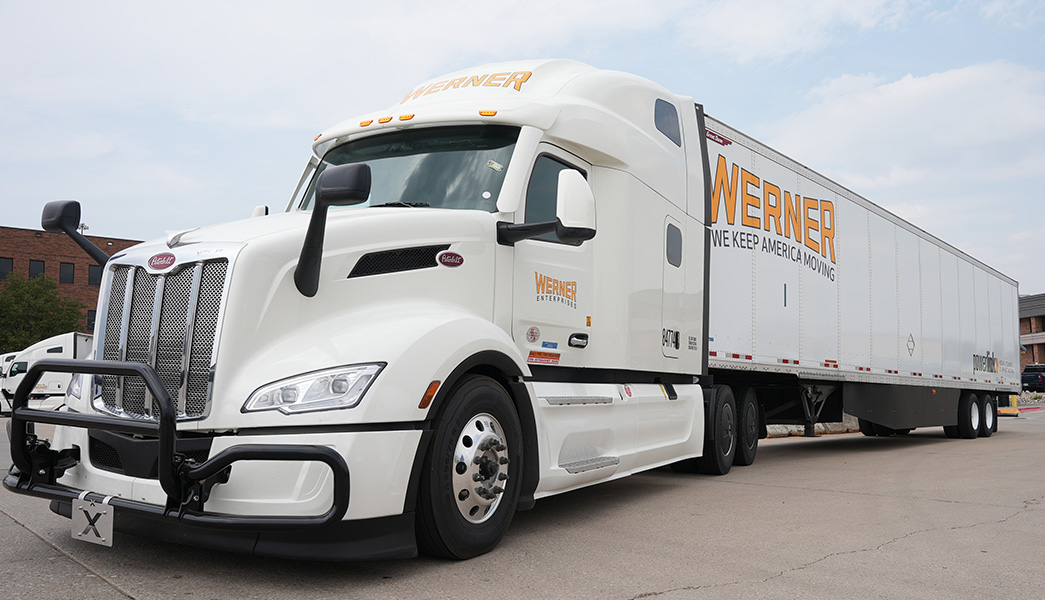
The Texas Supreme Court Erased an $89.7 Million Werner Trucking Verdict. Here's the Test That Decided It.
By Steven Lopez | Personal Injury Attorney, San Antonio, Texas
A Texas jury heard the evidence, found a trucking company responsible for a child's death, and awarded the family about $89.7 million. In June 2025, the Texas Supreme Court wiped out every dollar. The justices were willing to assume the trucker was driving negligently. They said the law asks a second question most people have never heard of, and that the family could not meet it. If you are ever hurt in a wreck with an 18-wheeler, that second question may decide your case.
What Happened on I-20 Near Odessa
On December 30, 2014, a winter weather advisory warned that ice was likely on West Texas roads. Trey Salinas was driving an F-350 pickup eastbound on I-20 near Odessa with four passengers: Jennifer Blake and her three children. Around 4:30 p.m., he lost control. In two to three seconds, the pickup crossed a 42-foot grassy median and struck a Werner Enterprises 18-wheeler heading west, driven by Shiraz Ali, a driver in training.
Seven-year-old Zackery Blake died. Twelve-year-old Brianna Blake became a permanent quadriplegic. Fourteen-year-old Nathan Blake and his mother suffered traumatic brain injuries.
A Houston jury found Werner and Ali liable. It assigned 70% of the responsibility to Werner employees other than Ali, 14% to Ali, and 16% to Salinas. It awarded $16.5 million to Jennifer Blake, $5 million to Nathan, and $68,187,994 to Brianna, about $89.7 million in all. The family had settled with Salinas before trial, and Werner received a credit for that settlement. The Fourteenth Court of Appeals, sitting en banc, affirmed.
What the Texas Supreme Court Decided
On June 27, 2025, in Werner Enterprises, Inc. v. Blake, No. 23-0493, the Court reversed and rendered judgment for Werner and Ali. Chief Justice Jimmy Blacklock wrote the opinion, joined by Justices Devine, Busby, Young, and Sullivan. Justice Bland, joined by Justices Boyd and Huddle, dissented in part. Press coverage reports she agreed the verdict could not stand but would not have ended the case outright. Justice Lehrmann did not participate, and the Court denied rehearing on September 26, 2025.
Here is the part that surprises people. The Court did not find that the trucker drove safely. It assumed his speed was negligent, and it assumed the crash would likely not have happened, or the injuries would have been less severe, had he been going slower. It still held that the law requires more.
Careless Versus Responsible: The Two Questions
Texas law asks two things about cause. The first is "but for": would the harm have happened without the defendant's negligence? The second is whether that negligence was a substantial factor, meaning a cause that carries real responsibility for the harm. The Court said a driver whose conduct only creates the conditions that make an injury possible is not the legal cause. It described Ali's truck as a "happenstance of place and time."
Three facts carried the analysis. The pickup crossed the median in about two seconds. The family's own accident-reconstruction expert testified that Ali reacted appropriately once the pickup came toward him. And a divided interstate with a wide grassy median, the Court reasoned, is a different world from the narrow two-lane road in Biggers v. Continental Bus System, Inc. (1957), where a verdict against a speeding bus driver stood. In Baumler v. Hazelwood (1961), the Court had already reversed a verdict against a driver struck by a car that suddenly veered into his lane.
The Court was careful about scope. It said its holding concerns responsibility between two drivers, and that a vehicle defect or conduct that made injuries worse could call for a different analysis.
Who Benefits From a Higher Causation Bar
Texans for Lawsuit Reform filed a friend-of-the-court brief urging the Court to side with Werner. The U.S. Chamber of Commerce also filed one and says it successfully urged the Court to limit the scope of proximate causation. Trucking-industry press covered the reversal as a win against what the industry calls nuclear verdicts.
The mechanism matters. A defendant can raise causation after a jury has already spoken. If a court decides no reasonable juror could find a substantial factor, it can erase the verdict and render judgment for the defense, with no new trial. Here, that happened more than ten years after the crash. Whether you see that as a needed check on large verdicts or a closed door for families who did nothing wrong depends on where you sit. The opinion itself acknowledges the victims were blameless.
What This Means If You Were Hurt in San Antonio
I-35, I-10, I-37, and Loop 410 carry heavy truck traffic through Bexar County every day, and I have spent years in San Antonio courtrooms handling injury claims. Werner does not mean trucking companies can never be held responsible. It means cause has to be proven, not assumed, and it has to be built from the first weeks of a case.
In practice, that means securing the evidence that shows what each driver did and when: the truck's electronic data on speed and braking, the driver's logs and training records, dashcam or nearby camera footage, the police report, and the scene itself. The Court's analysis turned on seconds of reaction time, and seconds are exactly what that evidence measures.
Under Tex. Civ. Prac. & Rem. Code § 16.003, you generally have two years from the date of injury to file suit, and two years from the date of death in a wrongful death case. The evidence usually does not wait that long.
Frequently Asked Questions
Did the Texas Supreme Court say the Werner driver did nothing wrong?
No. The Court assumed his speed was negligent. It held that his negligence was not a substantial factor in causing the injuries, so under Texas law he and Werner could not be held liable.
Can a court really erase a jury verdict after trial?
In limited circumstances, yes. A court can set aside a verdict when the law does not allow a reasonable juror to decide the other way. The Texas Supreme Court concluded that was the situation here.
Does this ruling mean truck drivers can't be blamed for crashes in Texas?
No. The Court limited its holding to responsibility between two drivers, and it noted that earlier cases turned on their facts, including how much time the driver had to react.
How long do I have to file a claim after a trucking crash in San Antonio?
Generally two years from the date of injury, or from the date of death in a wrongful death case. Every case is different, and evidence can disappear much sooner, so I encourage people to talk with a lawyer early.
If an 18-wheeler changed your family's life, I would be glad to look at what happened. I review these cases personally, and I will tell you honestly whether causation is a strength or a risk in yours before you spend a single dollar on it. You should not have to carry the calls, the paperwork, and the insurance companies alone. We stand guard, so you can stand down and heal.