
H-E-B Was Named in a Deadly 18-Wheeler Lawsuit. Here's How Texas Law Decides Who Else Is Responsible.
By Steven | Personal Injury Attorney, San Antonio, Texas
When an 18-wheeler crashes into a passenger car, most people look at two parties: the driver and the trucking company whose name is on the cab. A lawsuit filed in Bexar County shows how many more companies can be involved, and how quickly the proof can disappear.
Everything below comes from public reporting on a filed lawsuit. These are allegations, and nothing has been proven in court. I am using the case to explain how Texas law approaches a question every injured family should understand.
What the Lawsuit Alleges
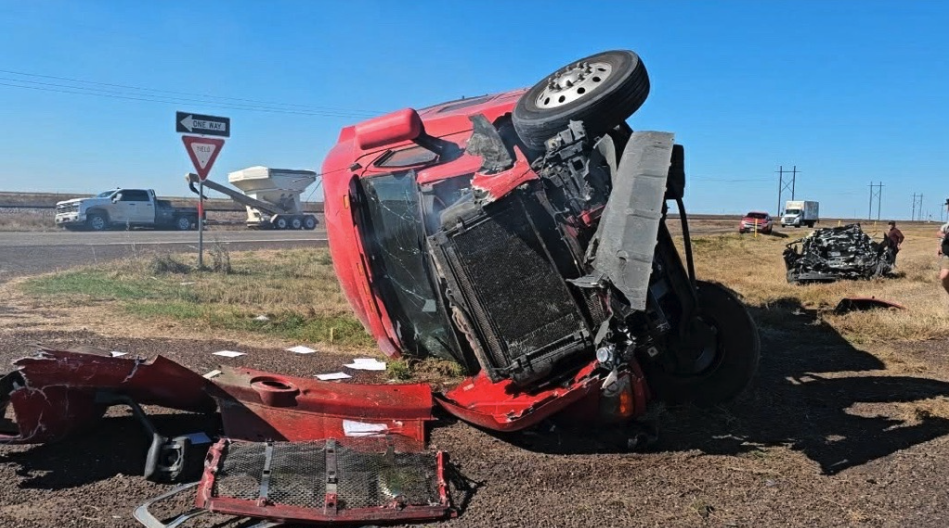
According to reporting by the San Antonio Current, MySA, and News 4 San Antonio, four women were killed on November 5, 2025, on U.S. Highway 87 just south of Dalhart in the Texas Panhandle. The lawsuit alleges that an 18-wheeler hauling a load of potatoes rear-ended their Nissan Altima after the driver of the car slowed down and turned on her hazard lights because of a flat tire.
Families filed suit in Bexar County District Court in late December 2025, seeking more than $1 million. The defendants named are H-E-B, two trucking companies, Parkway Transport and Scrappy Trucking LLC, and the truck's driver. The suit alleges the driver was going too fast, was inattentive, and was using a cell phone. It also alleges the trucking companies failed to preserve key evidence after attorneys asked them to.
H-E-B told News 4 San Antonio that the driver was a third-party vendor driver, not an H-E-B partner.
Who Can Be Responsible After a Texas Trucking Crash
In any serious truck crash, the first responsible party is the driver. Beyond that, the list can include the motor carrier that employed or contracted with the driver, the owner or lessor of the truck or trailer, a maintenance company, and, in some cases, a company that shipped the load or controlled how it was moved.
Whether a company beyond the carrier can be reached depends on facts: who hired whom, who controlled the work, what the contracts say, and which legal theory fits. I am not suggesting any particular company is responsible in the case above. That is for a court to decide.
How House Bill 19 Changed Trucking Trials
Since September 1, 2021, Texas trucking cases have operated under House Bill 19, signed by Governor Abbott on June 16, 2021, and codified in Chapter 72, Subchapter B of the Civil Practice and Remedies Code. A trucking defendant can ask the court to split the trial into two phases. If the employer also stipulates that the driver was its employee acting in the course and scope of employment, ordinary negligence claims against the employer, such as negligent hiring or negligent entrustment, generally cannot be tried in the first phase.
I covered HB 19 in more depth in a separate post. The practical point here is that the way a case is structured can limit what a jury hears about a company's own decisions, which makes the underlying records even more important.
Why Evidence Preservation Decides These Cases
Federal regulations require a motor carrier to keep a driver's records of duty status and supporting documents, such as dispatch records, for only six months (49 CFR 395.8(k)). Other evidence, such as dashcam video or data from the truck's onboard systems, may be overwritten on the company's own schedule.
Texas courts do sanction destroyed evidence, but the standard is demanding. In Brookshire Brothers, Ltd. v. Aldridge, 438 S.W.3d 9 (Tex. 2014), the Texas Supreme Court held that the strongest remedy, telling the jury to presume the lost evidence was unfavorable, generally requires a finding that the party intentionally destroyed it. That means a family cannot count on a judge to fix a missing-evidence problem months later. The protection is a written preservation demand sent quickly to every company that may hold records.
What This Means If You Were Hurt in San Antonio
San Antonio sits on some of the busiest freight corridors in Texas, including I-35 and I-10, and Loop 410 and Loop 1604 carry their share of commercial traffic. If an 18-wheeler or other commercial truck hit you:
- Photograph the truck: the cab door markings, the USDOT number, the license plates, and any trailer numbers. Most commercial trucks display the carrier's name and a USDOT number on the cab.
- Ask the officer to record the carrier's name and the driver's information in the crash report.
- See a doctor and keep every record.
- Do not give a statement to the trucking company's insurer.
- Have a preservation letter sent within days, not weeks.
The general deadline to file an injury lawsuit in Texas is two years (Civil Practice and Remedies Code § 16.003). The evidence deadline is much shorter.
Frequently Asked Questions
Can I make a claim against a company other than the trucking company?
Sometimes. It depends on the facts and the contracts between the companies. Texas law looks at who employed the driver, who controlled the work, and what each party did or failed to do.
What is a preservation letter?
It is a written demand that a company keep specific evidence, such as driver logs, dispatch records, dashcam video, and data from the truck's onboard systems. It puts the company on notice that the records may matter in a legal claim.
How long do trucking companies have to keep their records?
Under federal rules, hours-of-service records and supporting documents must be kept for six months. Other records may be kept for different periods or not at all.
How long do I have to file a claim?
Generally two years from the date of injury, though preservation should begin immediately.
If an 18-wheeler hit you or someone you love, I review these cases personally, and I will tell you honestly what I see. We handle the calls, the paperwork, and the evidence, so you can stand down and focus on healing.