
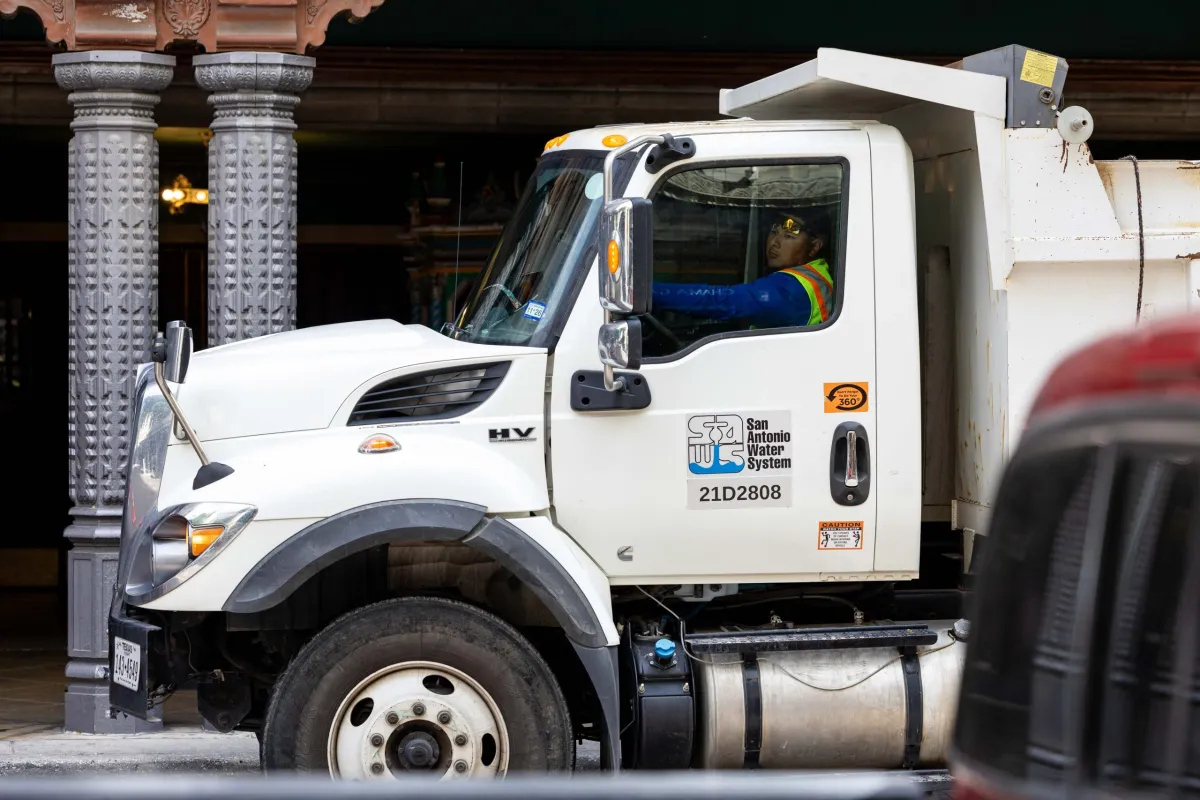
SAWS Agreed to Pay $150,000 After a Rear-End Crash. Here's How Texas Law Limits Claims Against the Government.
By Steven | Personal Injury Attorney, San Antonio, Texas
When most people picture a car wreck claim, they picture two drivers and two insurance companies. When the other driver works for the government, the rules change in ways that catch people off guard, and some of those rules run on a clock much shorter than the one you are expecting.
A story from KSAT Investigates, published October 19, 2026, shows what that looks like right here in San Antonio. It is worth walking through, because the lessons apply to anyone hit by a city, county, or utility vehicle.
What KSAT Reported
According to KSAT, the San Antonio Water System agreed to pay a $150,000 settlement to a North Side driver whose truck was hit from behind by a SAWS Ford Escort at East Ramsey Road and Jones Maltsberger Road in September 2023. Records cited in the story say he suffered four herniated discs, a separated shoulder, and a sprained knee, and needed platelet-rich plasma injections for his shoulder and knee problems.
He sued SAWS and the employee in 2025. His attorney had tried to settle in late 2024 for $500,000, citing nearly $113,000 in medical bills and another $276,000 in recommended future treatment. SAWS trustees approved the $150,000 settlement earlier this month, roughly three years after the crash.
I do not know what drove the final number, and a settlement is not a verdict. Cases settle for many reasons. But the story is a useful window into how differently these claims work.
Why Government Claims Play by Different Rules
Government entities in Texas are generally immune from lawsuits unless the legislature has waived that immunity. The Texas Tort Claims Act, found in Chapter 101 of the Civil Practice and Remedies Code, waives it in limited situations. One of the most important is injury caused by an employee's operation or use of a motor-driven vehicle within the scope of employment (§ 101.021).
That waiver is real, but it comes with conditions. Two of them catch people off guard more than any others.
Rule One: A Notice Deadline Shorter Than the Statute of Limitations
For most injury claims in Texas, you have two years to file a lawsuit (Civil Practice and Remedies Code § 16.003). Under the Tort Claims Act, however, a governmental unit is entitled to notice of your claim within six months of the incident (§ 101.101). A city charter or ordinance can require notice even sooner. There is an exception when the government has actual knowledge of the injury and its own possible fault, but I would never advise anyone to count on it.
Miss the notice deadline and a valid claim can be lost before you ever file suit.
Rule Two: A Cap on What You Can Recover
Section 101.023 limits the money damages available. Liability of the state is capped at $250,000 per person and $500,000 per occurrence for bodily injury or death. A municipality has the same caps. Other local units of government, such as counties and districts, are capped at $100,000 per person and $300,000 per occurrence. Property damage is capped at $100,000 per occurrence.
No matter what a jury might find your injuries are worth, recovery against the governmental entity is limited to those amounts. Two other provisions can complicate things further. Section 101.055 limits liability in certain emergency-response situations, and § 101.106 forces choices about whether to sue the government, the employee, or both. A wrong choice can end a case.
What This Means If You Were Hurt in San Antonio
If a city truck, a utility van, or a county vehicle hit you, whether on Loop 410, I-35, or a side street off Blanco Road, act on the notice problem first.
- Identify the entity. Note any unit number, logo, or license plate, and ask the officer to record it in the report.
- Get the police report and see a doctor the same day.
- Photograph everything: the vehicles, the scene, your injuries as they develop.
- Calendar six months from the crash date as a working deadline, and check whether the specific entity's charter or ordinance requires less.
- Put your notice in writing. Do not assume the government already knows.
- Be careful with the claims office. Do not sign releases or give recorded statements before you understand your rights.
Frequently Asked Questions
Can I make a claim if a city or SAWS vehicle hits me?
Yes, in many motor vehicle cases. Section 101.021 of the Tort Claims Act waives immunity when an employee's operation or use of a motor-driven vehicle causes injury, subject to the notice requirement and damage caps.
How much time do I have?
Notice generally has to reach the governmental unit within six months, and a city charter or ordinance can shorten that. The lawsuit itself is generally due within two years. Treat the shorter deadline as the real one.
Is there a limit on what I can recover?
Yes. Under § 101.023, caps range from $100,000 per person for counties and other local units to $250,000 per person for the state and municipalities, with per-occurrence limits on top.
What if the employee was responding to an emergency?
Section 101.055 can limit the government's liability in emergency situations, generally unless the employee acted with conscious indifference or reckless disregard for the safety of others. These cases need careful review.
If you were injured by a government vehicle, I review these cases personally, and I will tell you honestly what the deadlines and caps mean for you. We handle the notice, the paperwork, and the calls, so you can stand down and heal.